
What happened
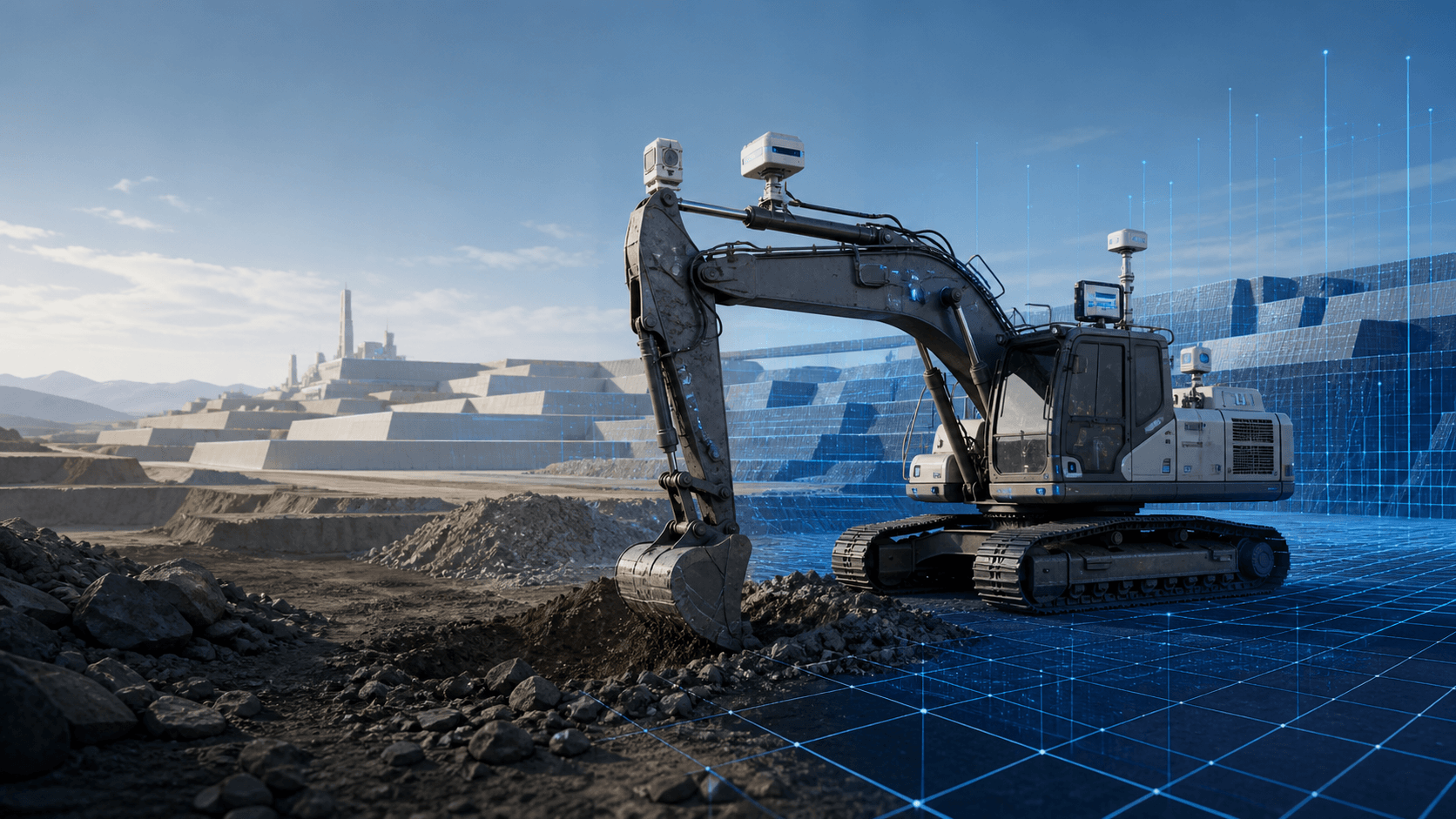
Gravis Robotics announced on August 17, 2026, that SoftBank had invested US$200 million in a Series A financing round. The Zurich company says the capital will help it expand its team, enter more markets, and place its autonomous earthmoving technology on additional machines and construction sites.
The announcement is notable not only for its size but for what Gravis automates. Instead of developing a humanoid robot or a new excavator, the company builds a retrofit hardware-and-software system that can add assisted, remote, or autonomous control to existing heavy equipment. That puts the investment behind a narrower physical task with an existing machine base and established customer budgets.
Gravis calls the round the largest Series A in construction robotics history. ETH Zurich and several independent reports confirm the amount and SoftBank’s participation. Gravis did not disclose a valuation in its own announcement; the widely reported US$1 billion valuation is attributed to external reporting.
Confirmed facts
| Item | Confirmed detail |
|---|---|
| Announcement date | August 17, 2026 |
| Financing | US$200 million Series A |
| Investor | SoftBank |
| Company origin | Founded in 2022 as an ETH Zurich spinout |
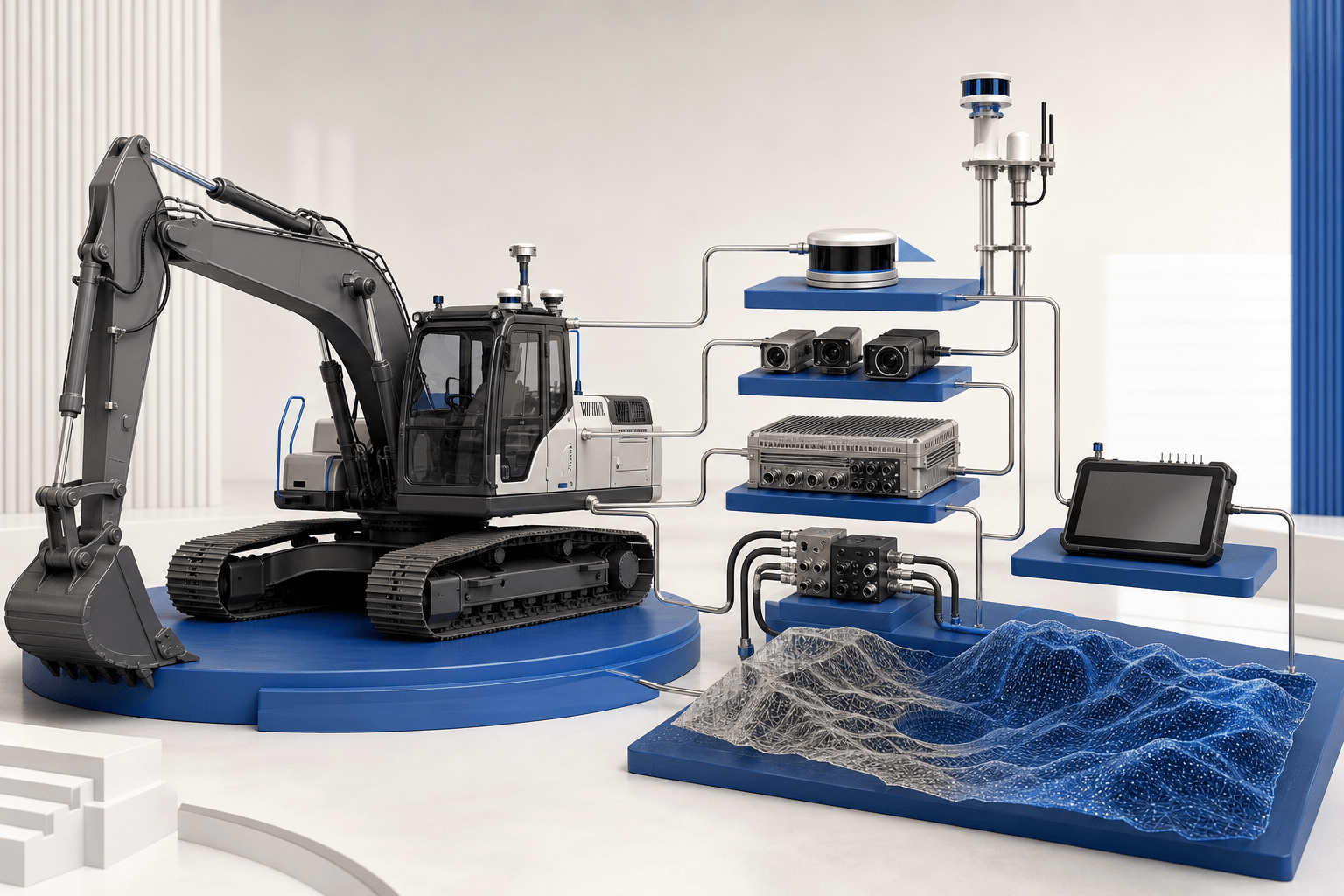
| Product approach | Retrofitting excavators and wheel loaders with sensors, edge computing, controls, and software |
| Operating modes | In-cab assistance, remote operation, and task-dependent autonomous operation |
| Reported commercial footprint | Dozens of commercial construction sites, according to ETH Zurich |
| Public project | Gravis listed as a lead partner in the UK CAM Pathfinder program |
ETH Zurich says the company employs around 80 people and is active across Europe, the United States, Latin America, and Asia. It also reports that the system is used on machines from manufacturers including Caterpillar, John Deere, Volvo, Hitachi, and JCB.
Company context
Gravis grew from research on controlling heavy machinery in irregular environments. Earthmoving is difficult to automate because every bucket movement changes the world the machine must perceive. Soil density, buried rocks, slopes, people, trucks, and site plans all alter the task while it is being performed.
The company’s central product is the Gravis Rack, a modular control kit that combines cameras, LiDAR, GNSS, edge computing, connectivity, and machine interfaces. Its Slate interface allows an operator to configure and supervise work. Gravis describes functions including excavation, grading, pile dumping, hopper loading, and truck loading.
The retrofit model is strategically important. Contractors and rental groups already own mixed fleets from multiple manufacturers. A technology layer that works across those machines could spread without requiring buyers to replace their equipment or commit to one new vehicle platform.
AI-generated illustration (not a photograph or measured data).
Why it matters
The financing tests a different route to embodied AI commercialization. Humanoid companies often argue that a general body can eventually serve many tasks. Gravis starts with machines already designed for valuable physical work and attempts to make them more autonomous. The hardware is less general, but the customer problem is already defined.
Construction also offers a strong economic motive. Excavators are expensive assets, trained operators are scarce in many markets, and delays can affect entire infrastructure schedules. If autonomy increases utilization, makes work more predictable, or lets one operator supervise several machines, the value can be measured in output, labor allocation, and project time.
The US$200 million gives Gravis resources to industrialize hardware, support deployments, build safety processes, and adapt its software across equipment types. Those operational functions may matter as much as additional model research because construction sites demand rugged systems, field service, training, and clear responsibility when conditions change.
Claims versus evidence
Company claim: Gravis says its terrain-aware excavation can increase throughput by up to 30%, improve safety, and bring autonomy to major jobsites worldwide. It also describes the financing as the largest Series A in its category.
Public evidence: ETH Zurich reports that Gravis technology is operating on dozens of commercial sites and across machines from several manufacturers. The company has named contractors, equipment companies, and rental partners in earlier announcements. The UK government separately lists Gravis among CAM Pathfinder project winners.
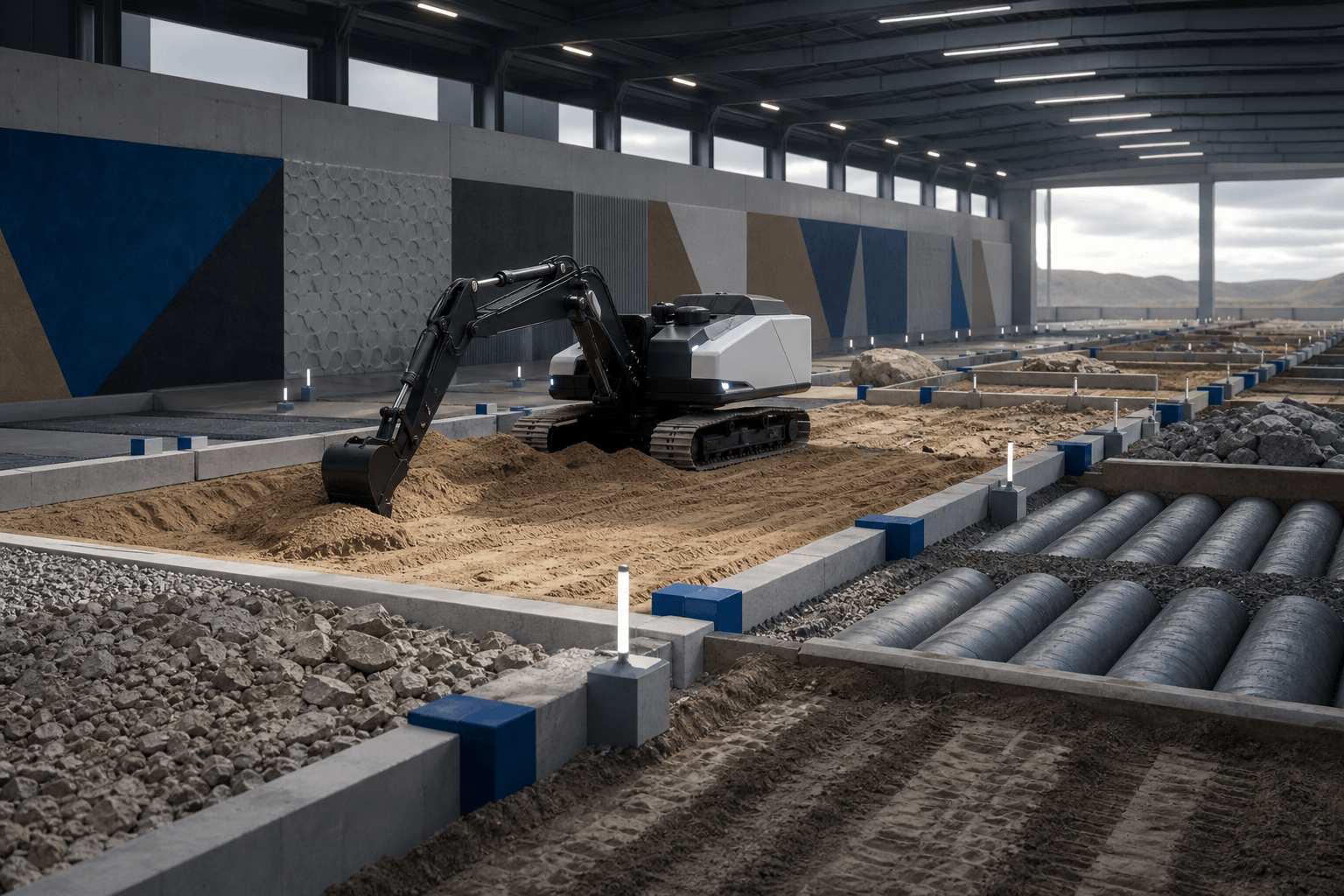
Evidence limit: Public sources do not provide a fleet total, paid revenue by deployment, intervention rates, uptime, accident data, or a controlled comparison supporting the 30% figure across sites. “Commercial site” establishes a stronger context than a laboratory demonstration, but it does not reveal whether a machine is continuously autonomous, supervised, remotely operated, or used for limited tasks.
AI-generated illustration (not a photograph or measured data).
What remains unknown
- The company’s post-money valuation and ownership transferred to SoftBank.
- Revenue, backlog, customer concentration, and pricing for the Gravis system.
- The number of equipped machines and active paid sites.
- Average autonomous operating hours, intervention frequency, and task-completion rate.
- Whether productivity gains persist across soil types, machine brands, operators, and project conditions.
- Hardware installation cost, maintenance burden, support staffing, and payback period.
- The exact public and private funding split, timetable, and deployment commitments within the UK project.
Editorial analysis
Gravis is attractive because it begins with a machine that already has a job. The company does not need to persuade a contractor that excavation matters; it needs to prove that autonomy improves the economics and safety of doing it. Retrofitting mixed fleets also aligns with how construction equipment is owned, rented, and replaced.
The funding changes Gravis’s ability to scale, but not the standard by which the business should be judged. The next meaningful evidence is a deployment table: equipped machines, named task, autonomous hours, intervention rate, output change, safety record, and customer renewal. Without that detail, the round remains a large bet on a plausible route to physical AI—not proof that the route has reached production scale.
Related company, robot, and technology
- Company: Gravis Robotics — developer of retrofit autonomy for construction machinery.
- Robot: Gravis-equipped excavators and wheel loaders — conventional heavy equipment converted into supervised or autonomous systems.
- Technology: LiDAR and camera perception, GNSS localization, learning-based control, edge computing, remote supervision, and autonomous earthmoving.
Sources & evidence
- Gravis Robotics Raises $200M for Construction Autonomy — Gravis Robotics; primary company announcement; August 17, 2026; accessed September 2, 2026.
- 200 million for autonomous excavators — ETH Zurich; institutional reporting; August 18, 2026; accessed September 2, 2026.
- £130 million for cutting-edge next generation vehicles — UK government; primary program announcement; August 10, 2026; accessed September 2, 2026.
- The Gravis Rack — Gravis Robotics; primary product description; accessed September 2, 2026.
- Gravis Robotics has raised a $200M Series A led by SoftBank — TNW; independent analysis; August 17, 2026; accessed September 2, 2026.
Sources — Gravis Robotics Series A
Access date for all sources: 2026-09-02
Primary sources
Gravis Robotics Series A announcement
- Publisher: Gravis Robotics
- URL: https://www.gravisrobotics.com/series-a
- Publication date: 2026-08-17
- Source type: Company announcement; primary
- Supports: US$200M Series A, SoftBank participation, stated expansion goals, company origin, physical-AI strategy, and references to the UK project.
- Evidence caution: “Largest Series A,” global scaling, productivity, and future deployment language are company claims.
UK CAM Pathfinder program announcement
- Publisher: UK Government
- URL: https://www.gov.uk/government/news/130-million-for-cutting-edge-next-generation-vehicles-securing-over-1800-jobs
- Publication date: 2026-08-10
- Source type: Government program announcement; primary
- Supports: Gravis Robotics Limited listed among CAM Pathfinder project winners and the program’s purpose of developing, testing, and scaling connected and automated mobility technologies.
Gravis Rack product page
- Publisher: Gravis Robotics
- URL: https://www.gravisrobotics.com/rack
- Publication date: Not stated
- Source type: Company product description; primary
- Supports: Retrofit architecture, supported equipment categories, sensors, edge computing, supervision interface, and described task modes.
Institutional and independent sources
200 million for autonomous excavators
- Publisher: ETH Zurich
- URL: https://ethz.ch/en/news-and-events/eth-news/news/2026/08/200-million-for-autonomous-excavators.html
- Publication date: 2026-08-18
- Source type: Institutional reporting from the company’s founding university
- Supports: Financing confirmation, company origin, approximate team size, retrofit strategy, assisted/remote/autonomous modes, dozens of commercial sites, machine brands, global activity, and research history.
Gravis Robotics has raised a US$200M Series A led by SoftBank
- Publisher: TNW
- URL: https://thenextweb.com/news/gravis-robotics-200m-series-a-softbank-autonomous-construction
- Publication date: 2026-08-17
- Source type: Independent technology reporting
- Supports: Financing context, retrofit business model, construction-autonomy opportunity, and the distinction between a large capital commitment and proven full autonomy at scale.