
1. Identity and current status
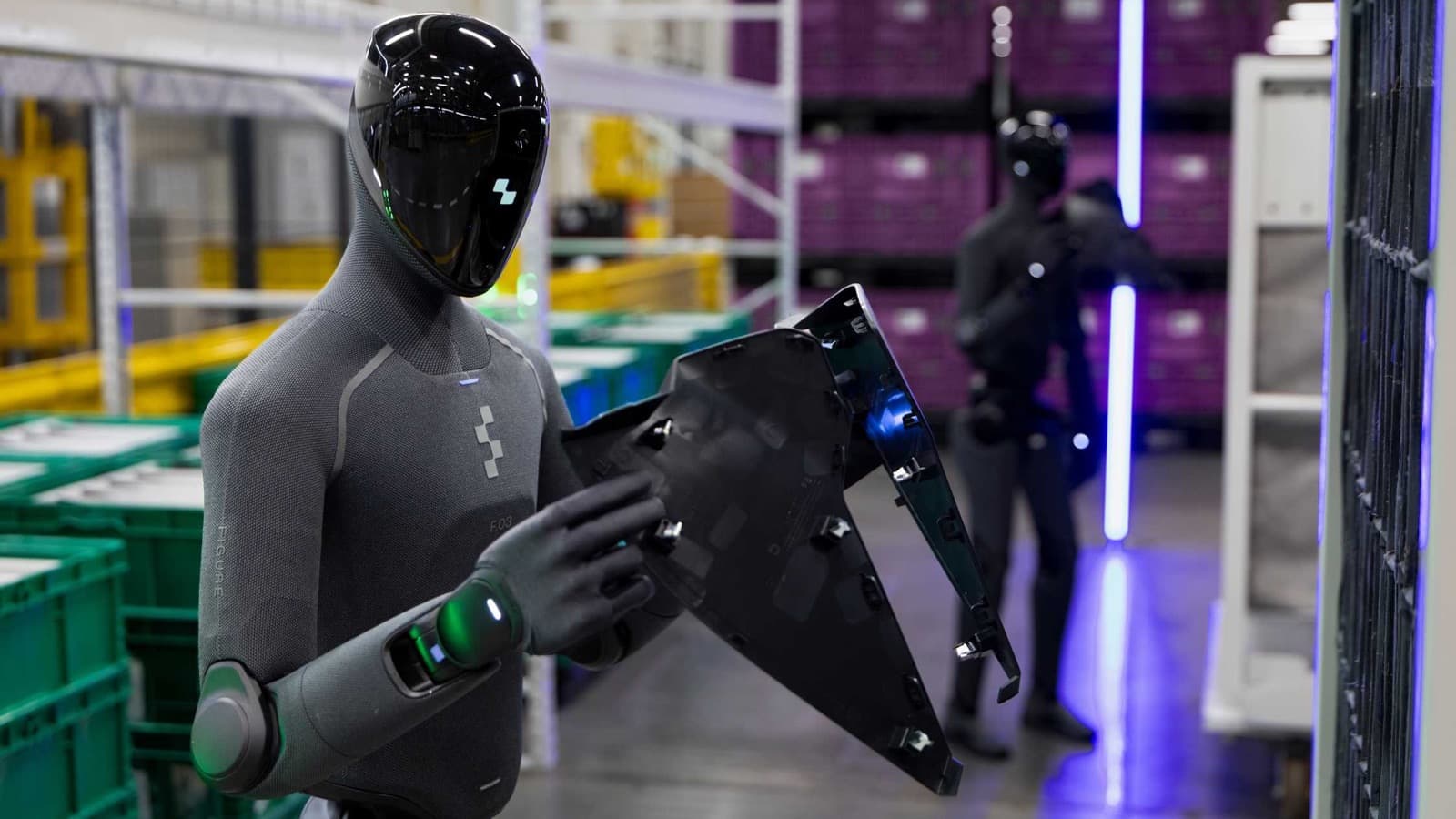
Figure 03 is the third-generation humanoid robot made by Figure AI. The company introduced it in October 2025 as a general-purpose platform designed around its proprietary Helix vision-language-action system, domestic tasks, commercial work, and higher-volume manufacturing. Figure has since built a growing fleet and placed the robot at BMW Group Plant Spartanburg for development of a logistics sequencing application. The most accurate status as of September 1, 2026 is Pilot: a current robot exists, a named external site confirms an active project, and production has moved beyond a handful of prototypes, but Figure 03 has no public sales channel and no disclosed customer-scale performance record.
The distinction between a pilot and a commercial product matters. Figure says its BotQ factory has delivered more than 350 Figure 03 units and demonstrated a one-robot-per-hour assembly cycle. Those are significant manufacturing claims, but they do not reveal how many robots work at customer sites, how many hours they operate without intervention, or whether the hourly cycle has been sustained over a full shift. Figure’s production update says units are divided among internal research, data collection, housework development, and commercial-use-case development. That is fleet building, not evidence of general availability.
2. Core specifications
| Field | Current public information | Evidence boundary |
|---|---|---|
| Height | Not publicly disclosed | Figure has not published a current Figure 03 specification sheet |
| Weight | Not publicly disclosed | Figure claims 9% less mass than Figure 02 but gives no absolute value |
| Total degrees of freedom | Not publicly disclosed | Helix 02 controls the complete body, but Figure does not state a joint or DoF total |
| Payload | Not publicly disclosed | No rated arm, hand, or whole-body payload and test method are public |
| Speed | Not publicly disclosed | Figure claims actuators are twice as fast as Figure 02; no absolute walking or task speed is given |
| Runtime | Not publicly disclosed | The company describes near-continuous use through charging breaks, not an unplugged runtime |
| Sensors | Head cameras, palm cameras, fingertip tactile sensors, and full-body proprioception | Figure claims each fingertip can detect forces as small as 3 g; independent calibration data are unavailable |
| Compute | Not publicly disclosed | Helix 02 runs onboard, but processor, memory, power, and redundancy are not specified |
| Battery | Capacity and chemistry not publicly disclosed; 2 kW inductive foot charging; UN38.3 certification claimed | Charging efficiency, time, cycle life, and operating duration are not public |
| Product version | Figure 03 hardware with Helix 02 software | Software and hardware revisions are not publicly enumerated |
3. Product position
Figure 03 is positioned between an internal learning fleet and a deployable commercial humanoid. Unlike a research platform, it is not sold to developers with open control interfaces. Unlike a conventional industrial robot, it is intended to move between variable tasks using a humanlike body and learned control. Figure’s stated targets include both homes and workplaces, but the best-supported near-term role is structured industrial material handling.
The hardware reflects that dual ambition. Figure’s launch page describes softer coverings, washable removable textiles, pinch-point padding, upgraded audio, wireless charging, and lower mass for human environments. For industrial use, it emphasizes faster actuators, palm cameras, tactile fingertips, higher-volume manufacturing processes, and customer-specific protective clothing. These are design choices, not proof that the robot is safe or reliable in either setting.
Figure’s differentiator is vertical integration: it designs the robot, actuators, sensors, battery modules, manufacturing system, and Helix software. That can shorten the loop between hardware failures, collected data, and model updates. It can also make independent assessment difficult because Figure controls the machine, training data, test conditions, service infrastructure, and most performance reporting.
4. Publicly claimed capabilities
Company claim: Figure says Figure 03’s vision system operates at twice the frame rate, one-quarter the latency, and a 60% wider field of view per camera than Figure 02. Each hand adds a palm camera for close-range views when head cameras are occluded, while internally developed fingertip sensors are claimed to detect forces as small as three grams. The company also says the robot supports 10 Gbps millimeter-wave data offload and 2 kW inductive charging through its feet.
The associated Helix 02 system uses three control layers. Figure describes System 2 as semantic reasoning, System 1 as a visuomotor policy producing whole-body targets at 200 Hz, and System 0 as a 10-million-parameter controller issuing actuator commands at 1 kHz. The company says System 0 was trained on more than 1,000 hours of retargeted human motion and in more than 200,000 parallel simulation environments.
Figure’s demonstrations include a four-minute dishwasher sequence with 61 actions and no claimed reset or human intervention, plus bottle-cap removal, pill extraction, syringe operation, and sorting small metal pieces. It also livestreamed three Figure 03 robots taking turns sorting packages over eight hours, claiming a roughly three-second package cadence. These demonstrations show the intended breadth of the system. They remain company-run tests without a published protocol, complete failure log, intervention record, or independent replication.
5. Verified capabilities
Independent evidence supports a narrower set of conclusions. TIME observed Figure 03 loading items into a dishwasher and clearing a table before launch; the robot had more difficulty folding T-shirts. TIME also reported that a human still needed to start the dishwasher and assist after some failures. This confirms a physical robot performing selected domestic manipulation, while showing that task completion remained conditional.
BMW’s own announcement confirms that Figure 03 entered Plant Spartanburg for development of a sequencing application. The task is concrete: pick unsorted components from larger containers, arrange them in a trolley, and make the trolley available for onward transport. BMW says development runs in parallel at the plant and at Figure. This independently confirms a named pilot and intended workflow; it does not report completed shifts, throughput, success rate, fleet size, safety events, or human interventions.
The package-sorting livestream provides useful public visibility but not independent verification. TechRadar’s report noted that viewers raised questions about autonomy and that the reporter had not watched the entire stream. An edited clip and a long company broadcast occupy different evidence levels, but neither replaces controlled third-party testing.
6. Software and developer access
Helix 02 is proprietary. Figure publishes architectural descriptions and demonstration videos, but no public SDK, API documentation, simulator, model weights, training dataset, low-level control interface, or safety-development kit. A general developer cannot buy Figure 03, reproduce a demonstration, inspect the model, or deploy a custom task.
Figure says it operates fleet-management, field-service, diagnostic, over-the-air update, and failure-analysis systems. These are important operational capabilities if they work as described, but their customer interfaces and service terms are not public. The same is true for teleoperation and data collection: public material confirms human demonstration data are part of training, while the exact supervision modes, intervention tools, retained data, and privacy controls remain undisclosed.
7. Pricing and availability
Pricing is Not publicly disclosed. Figure offers no public configurator, deposit, delivery schedule, warranty, service price, geographic availability, or standard commercial contract for Figure 03. At launch, TIME reported that the robot was not ready for domestic use and would first be available to selected partners for testing.
Company claim: BotQ’s first line was designed for capacity of up to 12,000 humanoid robots per year, with a goal of 100,000 robots over four years. Figure later said it had delivered more than 350 Figure 03 units and demonstrated an assembly cycle of one robot per hour. Capacity, demonstrated cycle time, and cumulative builds are different measures. None establishes sustained annual output, paid deliveries, or customer availability.
8. Deployment evidence
The strongest Figure 03 deployment evidence is the BMW Spartanburg project. BMW and Figure both identify Hall 52 and the sequencing workflow. Figure describes the robot picking thin metal parts, repositioning its body, placing parts, and pulling a wheeled cart under Helix 02 control. BMW’s language is more cautious: Figure 03 “will now start” on the application, and development continues at both organizations. The available record therefore supports pilot development, not a completed commercial deployment.
Earlier BMW results must not be transferred to Figure 03. BMW says Figure 02 supported production of more than 30,000 BMW X3 vehicles over ten months. That is relevant evidence about the partnership and predecessor, not proof that Figure 03 has achieved the same duration, throughput, or reliability.
Figure’s internal fleet is also operationally relevant. The company reports more than 150 networked factory workstations, more than 50 in-process inspections, over 80 functional tests per robot, and burn-in exercises across thousands of movement cycles. It reports first-pass yields above 80% for finished robots and 99.3% for its battery line. All are Figure’s own unaudited figures. No customer distribution, external fleet count, field uptime, or service-response metric has been published.
9. Editorial assessment
Figure 03 is one of the more credible humanoid pilots because three difficult pieces are visible at once: current hardware, a manufacturing system producing hundreds of units by company count, and a named industrial partner describing a specific task. Palm cameras, tactile fingertips, whole-body control, and wireless charging are coherent responses to real manipulation and uptime problems. BMW’s confirmation raises the evidence above a laboratory-only demonstration.
The central uncertainty is dependable autonomy. Figure publishes increasingly ambitious videos and detailed architecture, but not success distributions, intervention rates, mean time between failures, safety test results, duty cycle, energy use, service burden, or customer economics. Its one-hour factory cycle is not a measured one-hour robot task, and 350 produced units are not 350 paying deployments. Figure 03 has crossed from prototype presentation into pilot operation; the evidence does not yet support calling it broadly commercial, household-ready, or proven for unattended shifts.
The next decisive evidence would be a disclosed multi-robot customer deployment with defined tasks, operating hours, human interventions, failures, safety incidents, throughput, and service cost. Until then, Figure 03 should be read as a serious production and deployment program whose strongest claims still come from the company building it.
10. Update history
- 2026-09-01: Profile created. Status set to Pilot based on BMW’s confirmed Figure 03 project and the absence of public ordering or customer-scale performance data.
- 2026-06-30: Figure published its first Figure 03 logistics demonstration at BMW Group Plant Spartanburg.
- 2026-06-25: BMW confirmed that Figure 03 would begin work on a sequencing application in Hall 52.
- 2026-04-29: Figure said BotQ had delivered more than 350 Figure 03 robots and demonstrated a one-robot-per-hour manufacturing cycle.
- 2026-01-27: Figure introduced Helix 02 whole-body autonomy for Figure 03.
- 2025-10-09: Figure introduced Figure 03.
11. Sources & evidence
- Introducing Figure 03 — Figure AI, primary product announcement, 2025-10-09, accessed 2026-09-01.
- Ramping Figure 03 Production — Figure AI, primary manufacturing update, 2026-04-29, accessed 2026-09-01.
- F.03 Arrives at BMW — Figure AI, primary deployment demonstration, 2026-06-30, accessed 2026-09-01.
- BMW Group advances the use of Physical AI in production with Figure 03 — BMW Group, primary partner confirmation, 2026-06-25, accessed 2026-09-01.
- Introducing Helix 02: Full-Body Autonomy — Figure AI, primary software and demonstration report, 2026-01-27, accessed 2026-09-01.
- The Robot in Your Kitchen — TIME, independent on-site reporting, 2025-10-09, accessed 2026-09-01.
- Figure AI streamed humanoid robots sorting packages for 8 hours straight — TechRadar, independent secondary reporting, 2026-05-14, accessed 2026-09-01.
Figure 03 — sources
- Article slug:
figure-03 - Access date for all web sources: 2026-09-01
S1. Introducing Figure 03
- Publisher: Figure AI
- URL: https://www.figure.ai/news/introducing-figure-03
- Publication date: 2025-10-09
- Source type: Primary product announcement
- Supports: product identity and positioning; camera improvements relative to Figure 02; palm cameras; tactile sensor claim; 10 Gbps data offload; lower-mass claim; UN38.3 claim; washable soft goods; audio improvements; 2 kW inductive charging; manufacturing design; BotQ capacity target.
- Boundary: all performance figures and readiness statements are manufacturer claims; most lack absolute specifications or independent test data.
S2. Ramping Figure 03 Production
- Publisher: Figure AI
- URL: https://www.figure.ai/news/ramping-figure-03-production
- Publication date: 2026-04-29
- Source type: Primary manufacturing update
- Supports: more than 350 Figure 03 units delivered by Figure’s count; demonstrated one-unit-per-hour cycle; manufacturing workstations and inspections; yield figures; battery and actuator totals; end-of-line testing; fleet allocation and support systems.
- Boundary: unaudited company figures. A demonstrated cycle time is not sustained hourly output, and produced units are not equivalent to external deployments.
S3. F.03 Arrives at BMW
- Publisher: Figure AI
- URL: https://www.figure.ai/news/f-03-at-bmw
- Publication date: 2026-06-30
- Source type: Primary company deployment demonstration
- Supports: Hall 52 location; sequencing workflow; part manipulation, repositioning, and cart pulling; Helix 02 as the stated controller.
- Boundary: Figure calls this the first demonstration. No continuous operational metric or independent task audit is published.
S4. BMW Group advances the use of Physical AI in production with Figure 03
- Publisher: BMW Group
- URL: https://www.press.bmwgroup.com/canada/article/detail/T0458794EN/bmw-group-advances-the-use-of-physical-ai-in-production-with-figure-03-project-in-spartanburg?language=en&showMedia=photo
- Publication date: 2026-06-25
- Source type: Primary partner confirmation
- Supports: Figure 03 project at Plant Spartanburg; development in parallel at BMW and Figure; exact sequencing application; predecessor Figure 02 context; official Figure 03 photograph.
- Boundary: BMW confirms project start and intended workflow but does not disclose Figure 03 fleet size, duration, throughput, intervention rate, or completed results.
S5. Introducing Helix 02: Full-Body Autonomy
- Publisher: Figure AI
- URL: https://www.figure.ai/news/helix-02
- Publication date: 2026-01-27
- Source type: Primary software architecture and demonstration report
- Supports: S2/S1/S0 architecture; 200 Hz and 1 kHz control rates; 10-million-parameter S0; training-data and simulation claims; sensor inputs and actuator outputs; dishwasher and dexterity demonstrations.
- Boundary: company-run demonstrations and self-reported training figures; no model weights, independent replication, or complete trial logs.
S6. The Robot in Your Kitchen
- Publisher: TIME
- URL: https://time.com/7324233/figure-03-robot-humanoid-reveal/
- Publication date: 2025-10-09
- Source type: Independent on-site reporting
- Supports: witnessed Figure 03 dishwasher loading and table clearing; difficulties with T-shirt folding; human assistance boundaries; select-partner availability at launch; observed limitations of predecessor Figure 02.
- Boundary: observations are limited to selected visits and demonstrations; predecessor failures are not assigned directly to Figure 03.
S7. Figure AI streamed humanoid robots sorting packages for 8 hours straight
- Publisher: TechRadar
- URL: https://www.techradar.com/ai-platforms-assistants/figure-ai-streamed-humanoid-robots-sorting-packages-for-8-hours-straight-and-not-everyone-is-convinced-it-was-fully-real
- Publication date: 2026-05-14
- Source type: Independent secondary reporting
- Supports: existence and format of the eight-hour package-sorting broadcast; Figure’s autonomy and cadence claims; public skepticism and limitations of the reporter’s observation.
- Boundary: not a controlled audit; the reporter did not review the entire stream.