
1. Identity and current status
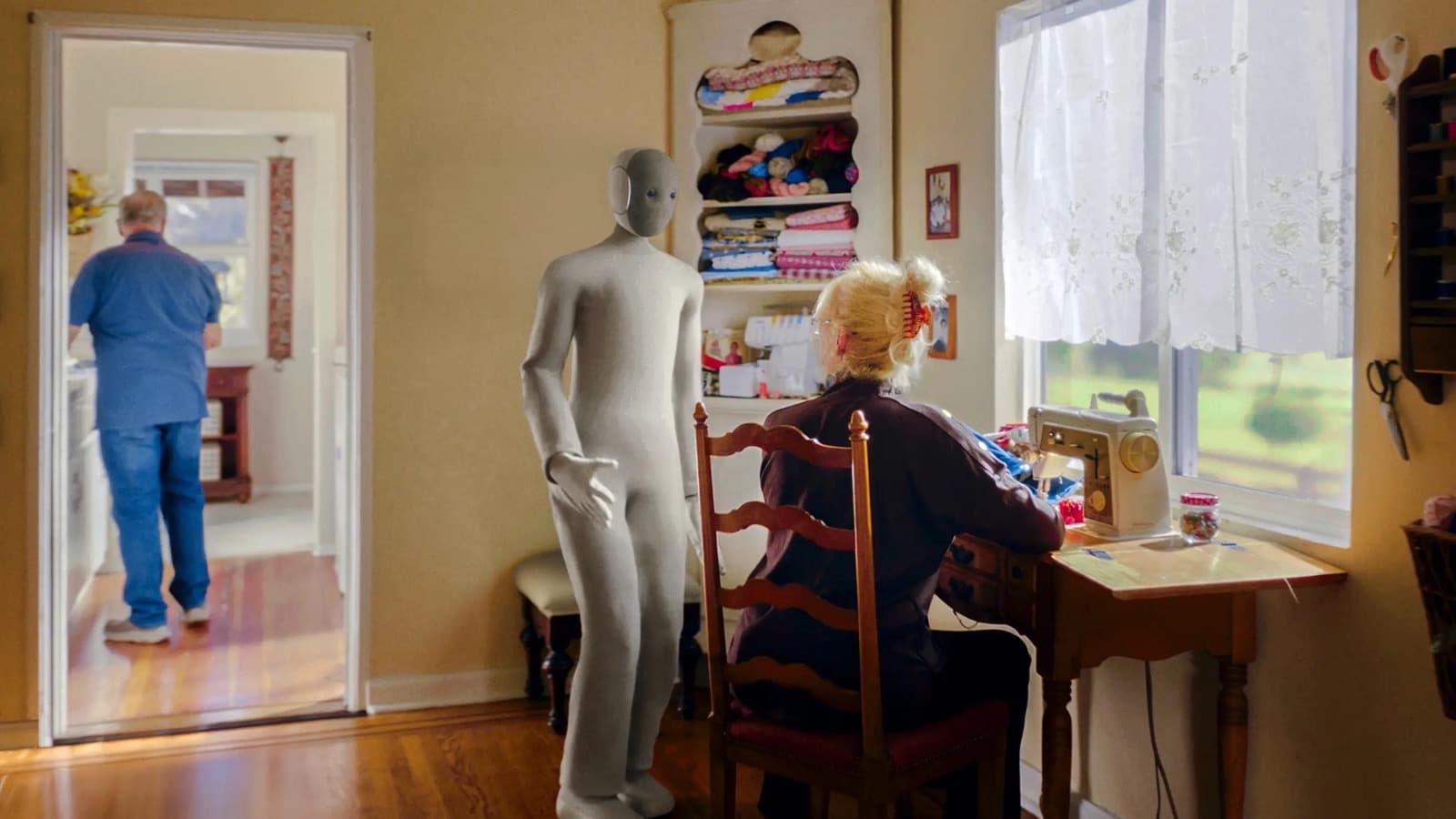
NEO is a soft-bodied bipedal humanoid from US-Norwegian robotics company 1X Technologies. It is designed for domestic chores, conversation, remote assistance, and continuous software improvement. 1X opened reservations on October 28, 2025, promising priority US deliveries in 2026 for a US$20,000 Early Access purchase and later availability through a US$499 monthly subscription. 1X launch announcement NEO order page
As of September 1, 2026, NEO’s most defensible status is Pilot. The product has a deposit-backed waitlist, published hardware specifications, a California production line, and internal home testing. However, 1X’s April factory update said robots coming off the line were being prioritized for employees and internal tests, and the reviewed sources did not identify a completed external customer-home delivery. A reservation is not a completed sale: 1X’s legal terms say the US$200 deposit places the customer on a waitlist for a later order invitation and makes no promise about when that invitation will arrive. NEO Factory Pre-order terms
This NEO is the production-intent successor to NEO Beta and NEO Gamma. Evidence from those earlier machines can explain the development path but cannot verify the final product’s specifications or autonomy. Likewise, 1X’s statement that “full-scale production” has begun is a Company claim; factory capacity and reservation count do not prove delivered units or household performance.
2. Core specifications
| Field | Current NEO specification | Evidence boundary |
|---|---|---|
| Height | 5 ft 6 in (about 1.68 m) | Company specification |
| Weight | 66 lb (about 29.9 kg) | Company specification |
| Degrees of freedom | Published allocation: hands 22 × 2, arms 7 × 2, neck 3, spine 2, legs 6 × 2; 75 total by arithmetic | July 2026 hand update describes 25 DoF per hand assembly: 22 in fingers/palm plus 3 wrist DoF |
| Payload | 154 lb lift; 55 lb carry; 18 lb arm payload | Company ratings; posture, duration, test object, and safety factor are not published |
| Speed | 6.2 m/s maximum run; 1.4 m/s walking | Company ratings; no independent test protocol or duration is public |
| Runtime | 4 hours | Company rating; workload and test method are not disclosed |
| Sensors | Dual 8.85 MP 90 Hz stereo fisheye cameras; four beamforming microphones; link-level differential IMUs; tactile and shear sensing in updated hands | Coverage, range, failure handling, and production sensor suppliers are not public |
| Compute | 1X NEO Cortex using Nvidia Jetson Thor; up to 2,070 FP4 TFLOPS | Company configuration and peak-format figure, not an application benchmark |
| Battery | 842 Wh on the hardware table; self-charging capability claimed | Product FAQ separately says 0.75 kWh, an unresolved first-party conflict |
| Product version | NEO Home Robot with July 2026 25-DoF hand assembly | Do not substitute NEO Beta or NEO Gamma results |
1X also lists 22 dB audible noise, an IP44 body, IP68 hands, a soft lattice-polymer shell, covered joints, Wi-Fi, Bluetooth, 5G, and a quick-charge rate described as six minutes of charging per hour of runtime. The company publishes tendon-drive figures including 95% backdrivability and one-day service replacement after specified cycle limits. These are manufacturer specifications, not independent safety certification or reliability results. NEO product page
3. Product position
NEO is positioned as a consumer appliance rather than a research kit or enterprise warehouse robot. Its human-scale body is intended to reach cupboards, operate doors, move through furnished rooms, and use objects designed for people. The soft knit exterior, light mass, tendon-driven actuation, covered joints, low-noise claim, and ear-ring status lights address a problem industrial humanoids rarely confront: being physically and socially acceptable inside an occupied home.
The product is also a service. Buyers receive basic onboard autonomy, while unfamiliar chores can be scheduled for a remote 1X Expert. A mobile app manages tasks, communication, monitoring, and remote control; 1X also advertises voice interaction, self-charging, memory, and a built-in language model. This makes early NEO a hybrid of robot hardware, cloud-connected software, remote labor, and a data-collection system.
That hybrid model may make a limited robot useful sooner, but it changes the buying decision. Customers are not merely judging whether the body can lift a basket. They must judge how often a human operator is needed, what that operator can see, whether the task can be safely interrupted, how data is handled, and whether expert support can scale. 1X publishes controls for scheduled access and opt-out choices, but not an autonomy rate or expected expert minutes per household.
4. Publicly claimed capabilities
Company claim: 1X says early NEO owners will receive foundational autonomy for opening doors, fetching objects, switching off lights, navigating, and repeating learned tasks. It markets chore scheduling for laundry, shelves, dishes, plants, tidying, and other domestic work. Redwood AI is described as a generalist model for learning and repeating chores; a built-in large language model supports conversation, while audio, visual context, and memory personalize interaction. The company also claims NEO can connect itself to its charger. NEO product page
The July 2026 hand announcement claims each production NEO will receive a 25-DoF force-controlled hand assembly with tactile and shear sensing, IP68 sealing, food-safe materials, and millions of test cycles. 1X showed manipulation including screws, coins, zippers, light bulbs, tools, glasses, pouring, wiping, and cable insertion. Those are Company demonstrations and specifications. They do not show that NEO’s autonomous software can select and complete the same tasks in an unfamiliar home. NEO hands
Expert Mode is explicitly part of the product promise. For a chore NEO does not know, the owner schedules a US-based 1X employee, accepts the operator through voice or mobile control, and sees the ear rings change color during the session. 1X says owners control each session and can opt out of sharing data for model improvement. Those safeguards are stated policies; their technical enforcement has not been independently audited in the reviewed evidence.
5. Verified capabilities
Independent evidence supports the existence of functional hardware, compliant movement, teleoperation, and selected simple autonomy, but not broad unsupervised housekeeping. Fast Company visited 1X’s Palo Alto operation, watched a NEO in action, and reported that day-one autonomous tasks were expected to be modest—such as fetching, greeting at a door, and turning off lights. The company told the publication that jobs become difficult beyond roughly three ten-second microtasks. That is a more concrete boundary than the launch video’s broad list of chores. Fast Company
The Wall Street Journal’s Joanna Stern spent time with NEO and its founder in October 2025. The resulting report focused on how much the robot still relied on a human operator and the privacy trade-off created when an expert sees through its cameras. Tom’s Guide’s review of that demonstration reported that its completed work was teleoperated and that only two actions in the promotional material were explicitly marked autonomous. This verifies a working expert-control loop, not autonomous household competence. Wall Street Journal video report Tom’s Guide analysis
Earlier NEO Gamma evidence shows why version discipline matters. TechCrunch observed the prototype walking, watering plants, and vacuuming with partial human control; it also saw the robot shake and collapse into the CEO’s arms, which 1X attributed to low battery and poor Wi-Fi. That is useful development evidence, but it neither verifies nor disproves the final NEO’s current specification. TechCrunch
6. Software and developer access
For owners, published controls are voice, the NEO mobile app, remote control through mobile and VR, scheduled Expert Mode, and over-the-air updates. Redwood AI, the world-model work, and the onboard language system are proprietary. 1X says limited sensor data may be sent to its servers to fulfil autonomous requests without being stored, and training-data sharing can be disabled. Detailed retention, diagnostic logging, security architecture, offline behavior, and failure-response documentation were not located on the public product page.
No public NEO SDK, API reference, simulator, model weights, low-level control interface, or third-party application submission process was found. A June 2026 company hiring announcement says 1X is bringing a developer platform to life, which is a future plan rather than present access. NEO should therefore be treated as a closed consumer product today, not an open developer platform. 1X engineering leadership announcement
7. Pricing and availability
The current order page lists US$20,000 ownership with a three-year warranty, premium support, and priority delivery, or a US$499-per-month subscription with standard delivery. A US$200 deposit is due now. 1X says US deliveries start in 2026, with purchase customers before subscribers; international deliveries come later. The 2025 launch announcement planned expansion beyond the US from 2027. NEO order page
The legal position is narrower than the headline. The deposit joins a waitlist; 1X makes no representation about when an order invitation will arrive. The deposit is refundable until 14 days after that invitation, after which it becomes non-refundable. Final pricing, add-ons, shipping, delivery, subscription minimum, and sales terms may change before 1X accepts the order. These terms mean NEO is available to reserve, not generally available for immediate shipment. Pre-order terms
8. Deployment evidence
1X says the 58,000-square-foot Hayward factory began full-scale production, has more than 200 employees, and can produce up to 10,000 NEOs annually. It also says the first year’s capacity—10,000 reservations—was booked in five days and targets more than 100,000 annual capacity by the end of 2027. Each is a Company claim. Capacity, reservations, robots assembled, and paid customer deliveries are different measures. NEO Factory
The strongest deployment evidence is internal. 1X reports placing current production units in employee homes to expand testing. Fast Company observed NEO at the company, and WSJ conducted a structured hands-on demonstration. The reviewed evidence does not provide a named independent household running a delivered production NEO over time, nor metrics for autonomous completion, expert intervention, falls, damage, privacy incidents, maintenance, uptime, or cost per completed chore.
9. Editorial assessment
NEO is currently best understood as a paid early-access home-robot pilot. Its strongest assets are a thoughtfully domestic body, low mass, compliant actuation, ambitious hands, an actual reservation mechanism, and a company willing to expose remote expert assistance as part of the product instead of hiding it. If executed safely, that human-in-the-loop system can complete tasks while generating training data that pure laboratory development cannot capture.
The largest gap is useful autonomy under independent observation. Hardware ratings are almost entirely company-supplied; the battery page contains an unresolved capacity conflict; delivery has not been independently confirmed; and no public metric says how often an expert must enter the loop. Privacy controls also need technical and operational verification, not just FAQ promises. The evidence that would change this assessment is a production unit in a named customer home for several months, with task-level autonomy, intervention time, failure, safety, privacy, maintenance, and cost data. Until then, NEO is an unusually concrete consumer-humanoid experiment—not a proven autonomous housekeeper.
10. Update history
- 2026-09-01: Profile created. Status set to Pilot because reservations, production activity, and internal home tests exist, while external customer delivery and sustained autonomy remain unverified.
- 2026-07-09: 1X announced the 25-DoF hand assembly intended for every shipping NEO.
- 2026-04-30: 1X announced its Hayward factory, internal-home priority, and production-capacity plans.
- 2026-03-17: 1X detailed Nvidia simulation, training, and Jetson Thor use in the NEO stack.
- 2025-10-28: 1X launched NEO pre-orders with purchase and subscription models.
- 2025-02-21: 1X introduced the predecessor NEO Gamma for internal home testing.
11. Sources & evidence
- NEO Home Robot — 1X Technologies, primary live product page, undated, accessed 2026-09-01.
- NEO Home Robot launch — 1X Technologies, primary launch announcement, 2025-10-28, accessed 2026-09-01.
- Order NEO — 1X Technologies, primary commerce page, accessed 2026-09-01.
- NEO pre-order terms — 1X Technologies, primary legal terms, updated 2025-10-28, accessed 2026-09-01.
- NEO Factory — 1X Technologies, primary manufacturing update, 2026-04-30, accessed 2026-09-01.
- NEO’s Hands — 1X Technologies, primary engineering announcement, 2026-07-09, accessed 2026-09-01.
- Meet the humanoid robot headed for homes — Fast Company, independent visit and interviews, 2025, accessed 2026-09-01.
- I Tried the First Humanoid Home Robot — The Wall Street Journal, independent hands-on video report, 2025-10-28, accessed 2026-09-01.
- The NEO home robot has one huge problem — Tom’s Guide, independent analysis, 2025-10-30, accessed 2026-09-01.
- 1X will test humanoid robots in homes — TechCrunch, independent NEO Gamma demonstration report, 2025-03-21, accessed 2026-09-01.
1X NEO — sources
- Article slug:
1x-neo - Access date for all web sources: 2026-09-01
S1. NEO Home Robot
- Publisher: 1X Technologies
- URL: https://www.1x.tech/neo
- Publication date: Undated live page
- Source type: Primary product page
- Supports: current product identity, design, autonomy and Expert Mode descriptions, dimensions, payload ratings, subsystem DoF, speeds, battery, sensors, compute, connectivity, safety design, interfaces, self-charging, data-handling FAQ, and accessories.
- Boundary: specifications and capabilities are company claims; test procedures and independent certification are not provided.
S2. NEO Home Robot launch
- Publisher: 1X Technologies
- URL: https://www.1x.tech/discover/neo-home-robot
- Publication date: 2025-10-28
- Source type: Primary launch announcement
- Supports: launch date; domestic positioning; early autonomy and Expert Mode; US$20,000 purchase and US$499 monthly subscription; initial 2026 US delivery plan; later international expansion; color options.
- Boundary: launch language is promotional and forward-looking; it does not confirm delivery or task reliability.
S3. Order NEO
- Publisher: 1X Technologies
- URL: https://www.1x.tech/order
- Publication date: Undated live commerce page
- Source type: Primary commerce page
- Supports: US$200 deposit; US$20,000 ownership; three-year warranty; premium support; US$499 monthly subscription; priority versus standard delivery; current statement that US deliveries start in 2026.
- Boundary: page initiates a pre-order and waitlist, not immediate shipment.
S4. NEO pre-order terms
- Publisher: 1X Technologies
- URL: https://www.1x.tech/legal
- Publication date: Updated 2025-10-28
- Source type: Primary legal terms
- Supports: deposit creates waitlist position; no guarantee of invitation timing; refund deadline; price and add-on changes; later Terms of Sale; order-acceptance boundary; personal domestic-use restriction.
- Boundary: shipping, delivery, final warranty, and subscription minimum remain for the later order invitation or Terms of Sale.
S5. NEO Factory
- Publisher: 1X Technologies
- URL: https://www.1x.tech/discover/neo-factory
- Publication date: 2026-04-30
- Source type: Primary manufacturing update
- Supports: Hayward facility, staffing, company-stated full-scale production, 10,000 annual capacity, 100,000-plus 2027 target, first-year reservation claim, internal-home testing priority, and promised 2026 shipments.
- Boundary: all counts are company claims; capacity and reservations do not prove completed production or customer delivery.
S6. NEO’s Hands
- Publisher: 1X Technologies
- URL: https://www.1x.tech/discover/neos-hands
- Publication date: 2026-07-09
- Source type: Primary engineering announcement
- Supports: 25-DoF assembly allocation, force-controlled tendon design, tactile and shear sensing, IP68 and food-safe claims, manipulation demonstrations, cycle testing, production-line claim, and plan to install the hands on every shipping NEO.
- Boundary: no independent teardown, durability test, or autonomous-task validation was located.
S7. Developing NEO’s AI Using NVIDIA’s Robotics Platform
- Publisher: 1X Technologies
- URL: https://www.1x.tech/discover/nvidia-gtc-2026
- Publication date: 2026-03-17
- Source type: Primary technical announcement
- Supports: company use of Nvidia training infrastructure, Isaac simulation, Jetson Thor onboard inference, and Argus camera processing.
- Boundary: does not publish customer SDK access, model weights, latency, power draw, or task benchmarks.
S8. Engineering leadership and planned developer platform
- Publisher: 1X Technologies
- URL: https://www.1x.tech/discover/tom-sanocki-vp-engineering
- Publication date: 2026-06-25
- Source type: Primary company announcement
- Supports: statement that a NEO developer platform is being brought to life.
- Boundary: a roadmap statement, not a released SDK, API, simulator, or app program.
S9. Meet the humanoid robot headed for homes
- Publisher: Fast Company
- URL: https://www.fastcompany.com/91428202/1x-technologies-home-robot-neo
- Publication date: 2025
- Source type: Independent company visit and interviews
- Supports: observed NEO hardware; intended day-one autonomy boundary; microtask limitation disclosed by 1X; Expert Mode operation and consent design; company home-use expectations.
- Boundary: observation occurred at 1X, not in a long-term independent household deployment.
S10. I Tried the First Humanoid Home Robot
- Publisher: The Wall Street Journal
- URL: https://www.youtube.com/watch?v=f3c4mQty_so
- Publication date: 2025-10-28
- Source type: Independent hands-on video report
- Supports: physical NEO demonstration; significant human-operator role; camera-based privacy trade-off; current-versus-promised autonomy framing.
- Boundary: structured media demonstration, not a production-unit endurance test.
S11. NEO’s autonomy and privacy gap
- Publisher: Tom’s Guide
- URL: https://www.tomsguide.com/home/smart-home/the-neo-home-robot-thats-breaking-the-internet-promises-to-change-the-world-but-theres-one-huge-problem
- Publication date: 2025-10-30
- Source type: Independent analysis of launch materials and WSJ hands-on
- Supports: distinction between actions explicitly labelled autonomous and Expert Mode work; consent, light-ring, and person-blurring claims; privacy and security questions.
- Boundary: relies partly on launch media and WSJ reporting rather than a separate long-duration test.
S12. 1X will test humanoid robots in homes
- Publisher: TechCrunch
- URL: https://techcrunch.com/2025/03/21/1x-will-test-humanoid-robots-in-a-few-hundred-homes-in-2025/
- Publication date: 2025-03-21
- Source type: Independent NEO Gamma demonstration report
- Supports: predecessor’s partial teleoperation, early home-test plan, observed basic tasks and collapse, and privacy questions.
- Boundary: NEO Gamma is not the final NEO product and cannot validate its specifications or current capability.